
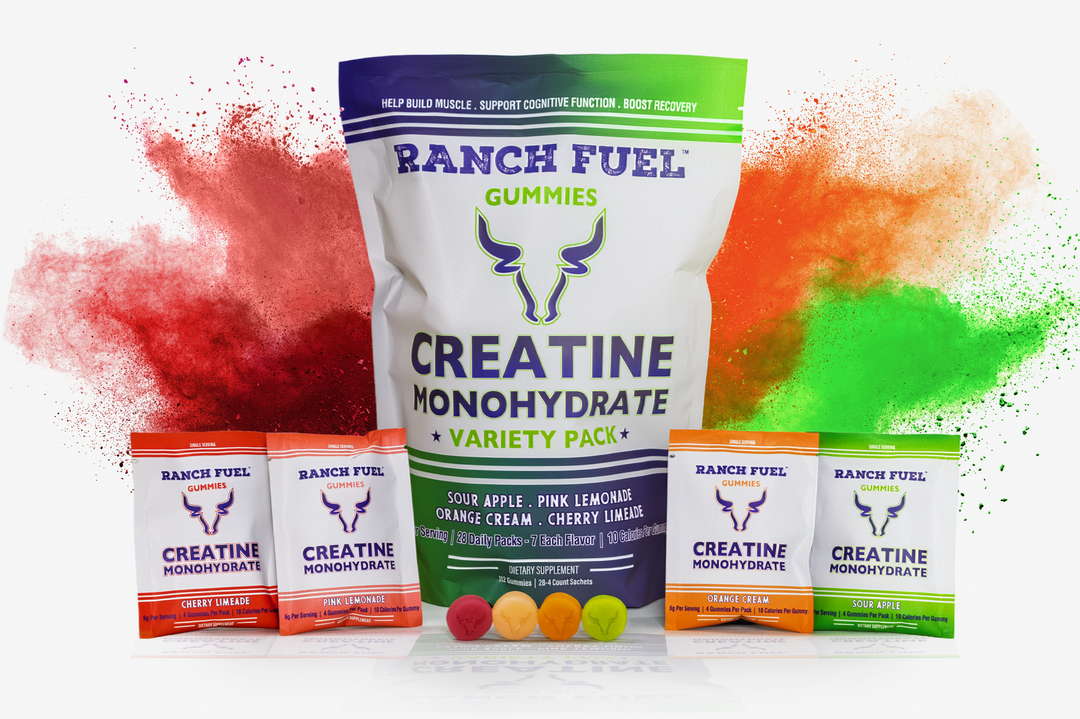
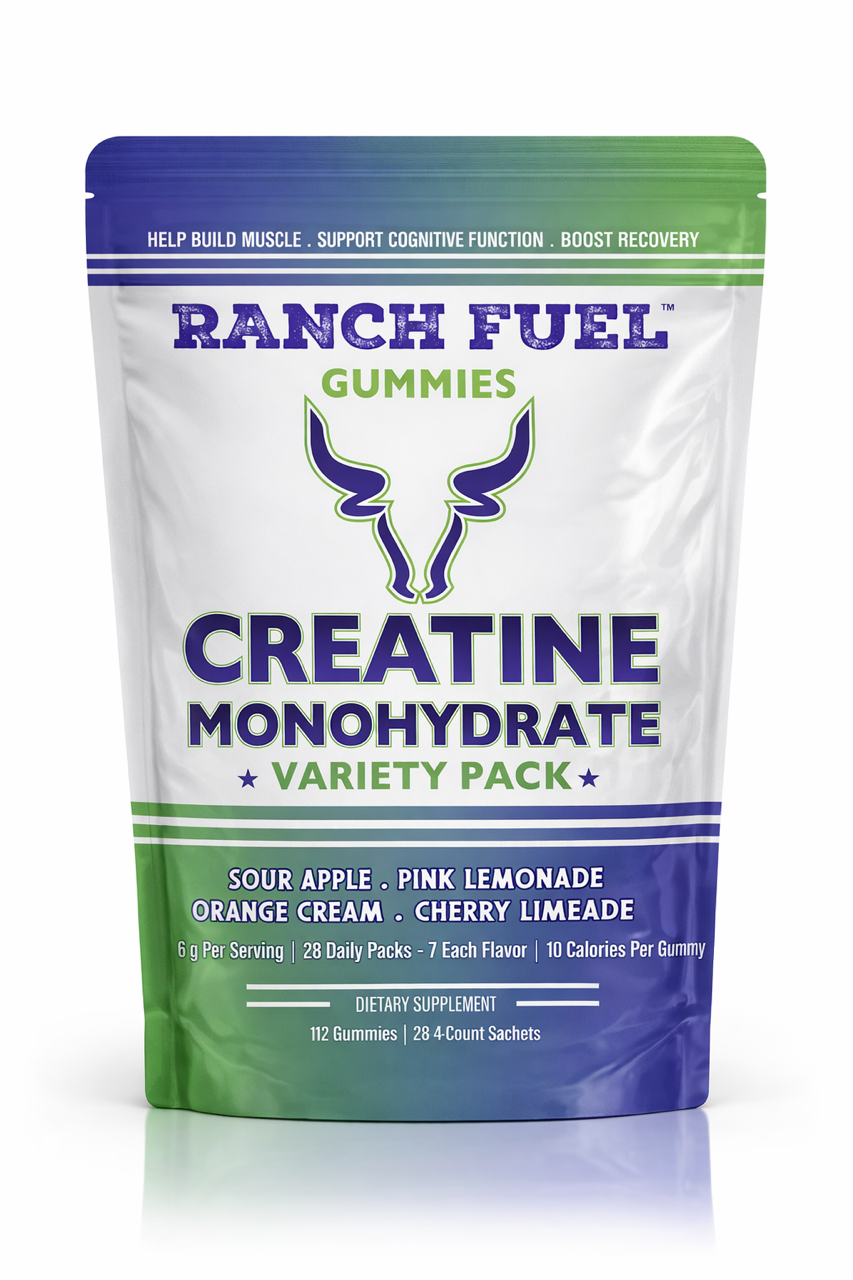
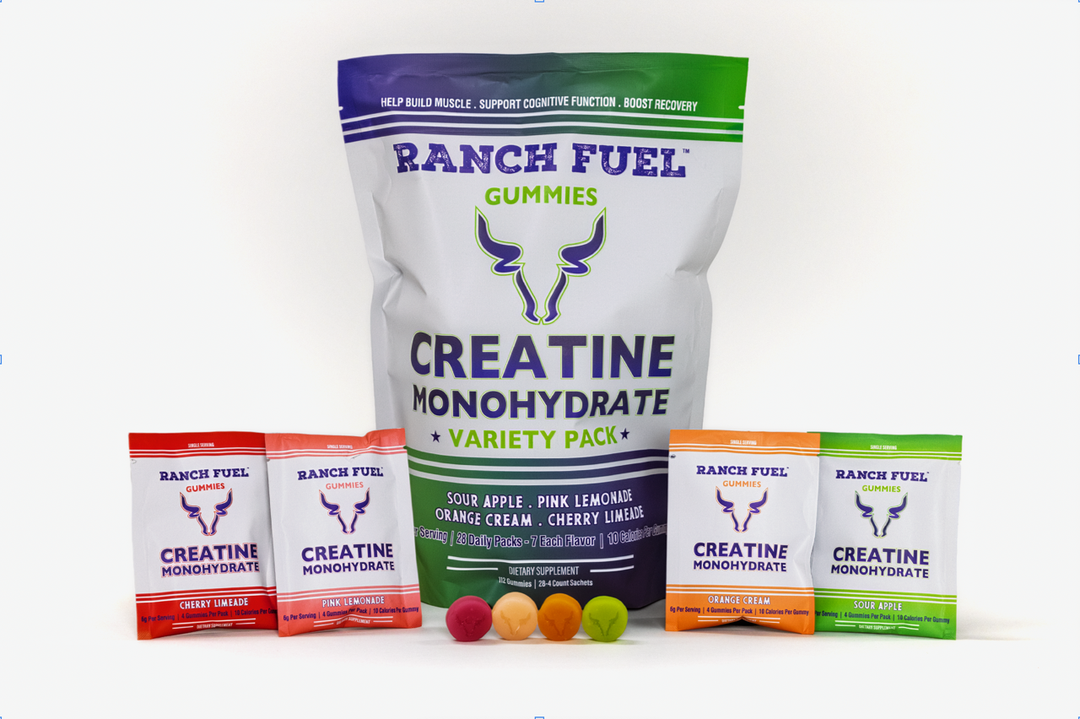
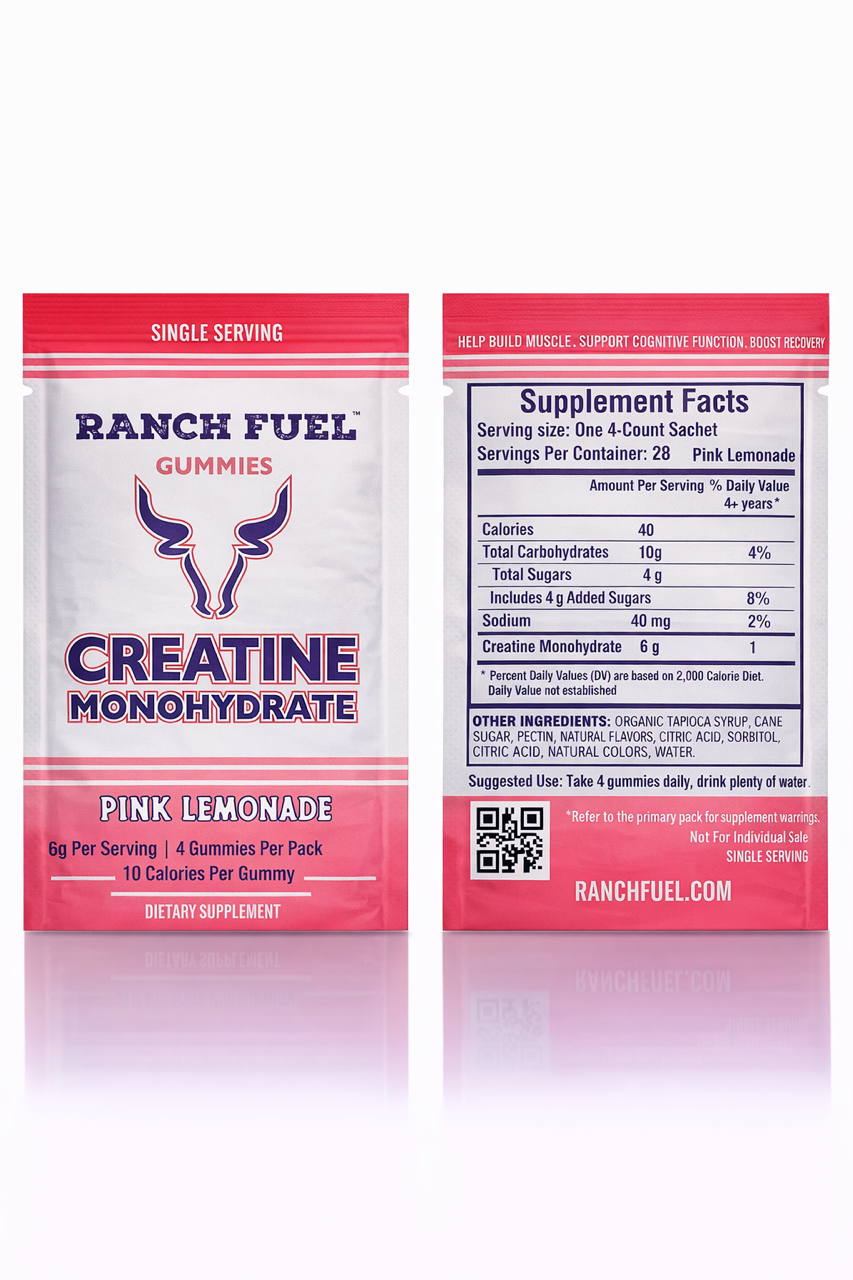
Creatine Monohydrate Gummies - Variety Pack
Orange Cream, Sour Apple, Cherry Limeade, Pink Lemonade
28 Daily Packs - 7 Each Flavor - 4 Gummies Per Pack
-
Support Cognitive Function
-
Boost Recovery
-
Help Build Muscle
-
Increase Cell Hydration
-
Convenient For Travel
-
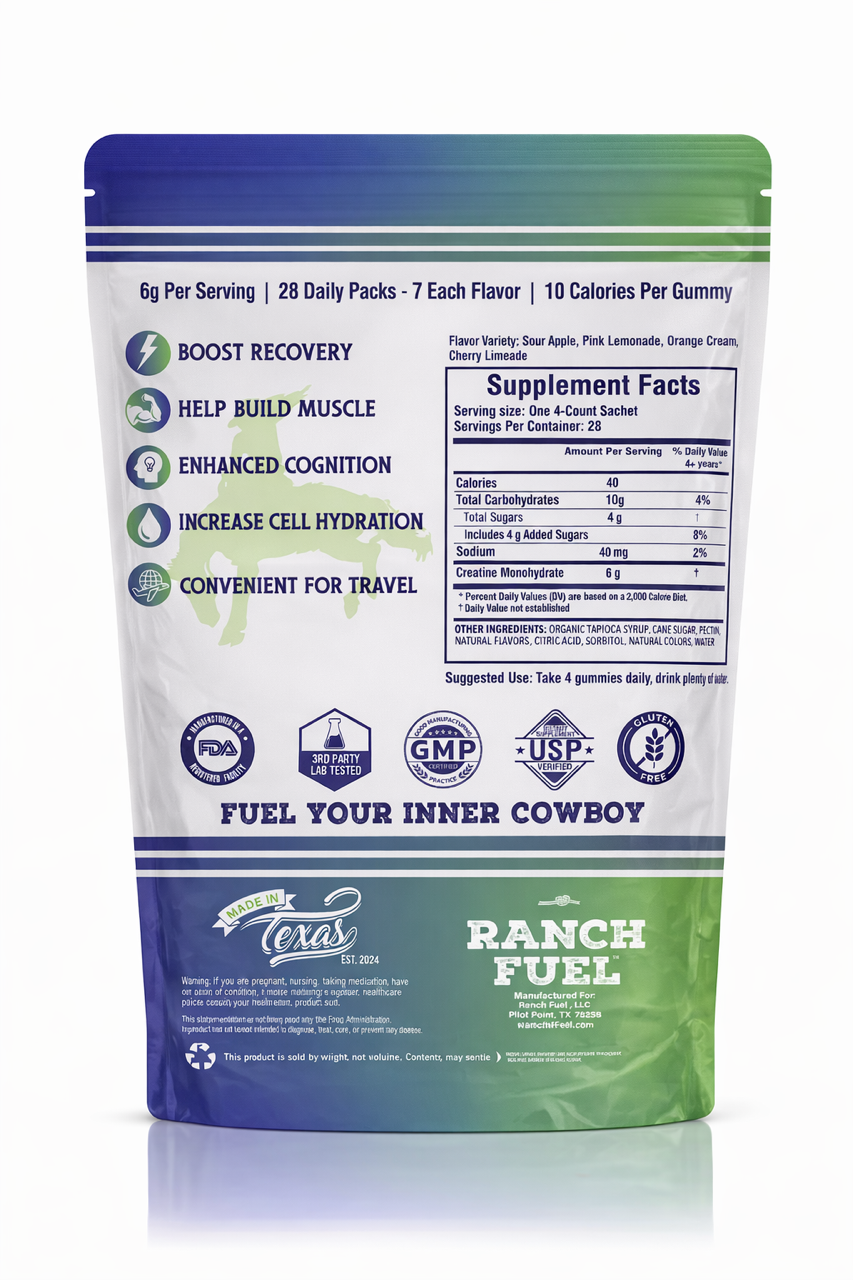
6 grams Per Serving Pack
-
10 Calories Per Gummy
Ingredients: Creatine Monohydrate, Organic Tapioca Syrup, Cane Sugar, Pectin, Natural Flavors, Citric Acid, Sorbitol, Natural Colors, Water
-
Support Cognitive Function
-
Boost Recovery
-
Help Build Muscle
-
Increase Cell Hydration
-
Convenient For Travel
-
6 grams Per Serving
-
10 Calories Per Gummy
FREE Shipping & 100% Satisfaction Guarantee
Orders placed before 3:00 pm ship same day (M-F)
FREE Shipping & Satisfaction Guarantee
Orders before 3:00 pm ship same day (M-F)
Customer Reviews
Frequently Asked Questions
-
Creatine is a nitrogenous organic acid synthesized endogenously from the amino acids arginine, glycine, and methionine, primarily in the liver and kidneys, and stored predominantly as phosphocreatine (PCr) in skeletal muscle and neural tissue (Wyss & Kaddurah-Daouk, 2000). Approximately 95% of total body creatine is localized in skeletal muscle, with the remaining fraction distributed in the brain and other tissues, while dietary creatine is obtained almost exclusively from animal-derived foods such as red meat and fish (Wyss & Kaddurah-Daouk, 2000).
Creatine serves as a rapid phosphate donor within the phosphagen energy system, enabling the regeneration of adenosine triphosphate (ATP) during short-duration, high-intensity energy demands. Supplementation has been shown to significantly increase intramuscular phosphocreatine concentrations, resulting in consistent improvements in maximal strength, power output, lean body mass, and exercise recovery across resistance and high-intensity training modalities (Rawson & Volek, 2003; Kreider et al., 2017).
Beyond its musculoskeletal effects, creatine plays a critical role in neuronal bioenergetics, mitochondrial efficiency, and cellular osmotic regulation within the central nervous system. Clinical and meta-analytic evidence indicates that creatine supplementation can enhance cognitive performance, particularly under conditions of mental fatigue, sleep deprivation, hypoxia, or metabolic stress, highlighting its role in brain energy homeostasis (Avgerinos et al., 2018).
Creatine monohydrate is widely recognized as the most extensively studied dietary supplement in sports nutrition, with a strong safety profile supported by long-term human trials across diverse populations, including athletes, older adults, and clinical cohorts, with no consistent evidence of adverse renal, hepatic, or cardiovascular effects when consumed at recommended doses (Kreider et al., 2017).
Scientific References
-
Wyss, M., & Kaddurah-Daouk, R. (2000). Creatine and creatinine metabolism. Physiological Reviews, 80(3), 1107–1213. https://doi.org/10.1152/physrev.2000.80.3.1107
-
Kreider, R. B., et al. (2017). International Society of Sports Nutrition position stand: safety and efficacy of creatine supplementation. Journal of the International Society of Sports Nutrition, 14:18. https://doi.org/10.1186/s12970-017-0173-z
-
Rawson, E. S., & Volek, J. S. (2003). Effects of creatine supplementation and resistance training on muscle strength and weightlifting performance. Journal of Strength and Conditioning Research, 17(4), 822–831.
-
Avgerinos, K. I., et al. (2018). Effects of creatine supplementation on cognitive function of healthy individuals. Experimental Gerontology, 108, 166–173. https://doi.org/10.1016/j.exger.2018.04.018
-
JOIN OUR VIP CLUB
Enjoy member only savings & exclusive discounts!
JOIN OUR VIP CLUB
Enjoy member only savings & exclusive discounts!